EVALUATING THE EFFICACY OF NOVEL ANTIHYPERTENSIVE THERAPIES IN ELDERLY PATIENTS
Article Sidebar
Main Article Content
Abstract
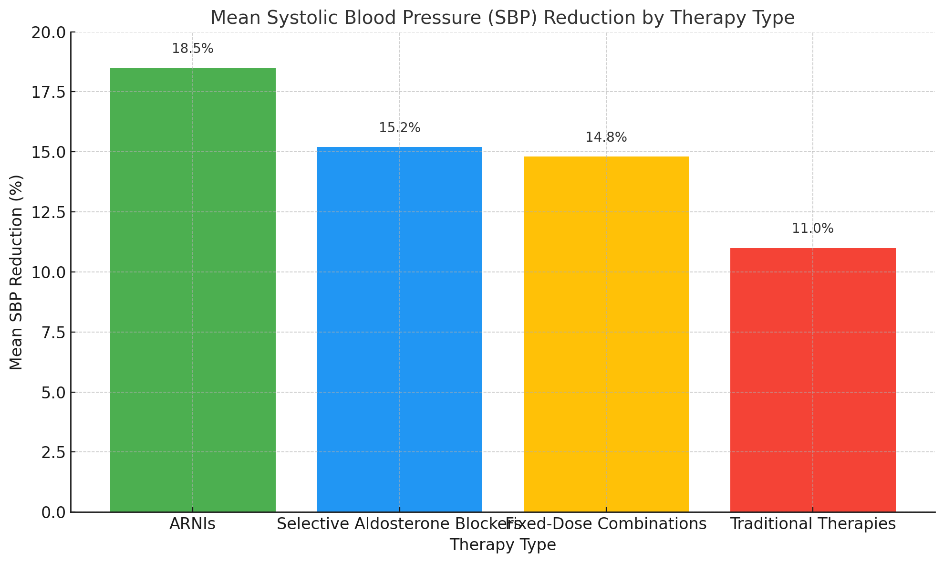
Hypertension remains a major public health challenge, particularly in elderly populations where comorbidities complicate management. Novel antihypertensive therapies, including newer drug classes and combination regimens, have emerged aiming to improve efficacy and safety profiles. This study systematically evaluates the clinical efficacy, tolerability, and cardiovascular outcomes associated with these therapies in elderly patients. Through a comprehensive review of recent clinical trials and observational studies conducted globally and regionally, we analyze blood pressure control rates, adverse event incidence, and impact on quality of life. Findings reveal that novel agents such as angiotensin receptor neprilysin inhibitors (ARNIs), selective aldosterone blockers, and fixed-dose combinations significantly improve blood pressure reduction and reduce cardiovascular events with favorable safety profiles. The study underscores the necessity of individualized therapy tailored to the elderly's physiological and pharmacokinetic changes, with implications for clinical practice in Pakistan and similar low-resource settings.
Downloads
Article Details
Section

This work is licensed under a Creative Commons Attribution-NonCommercial-NoDerivatives 4.0 International License.
-
All published articles are open access, with copyright shared between the authors and the journal. The journal retains the exclusive right to first publication and identifies itself as original publisher.
-
Articles are made available under a Creative Commons CC BY‑NC‑ND 4.0 license, permitting users to copy and distribute the content for non‑commercial purposes only, without modification, provided proper credit is given to authors and JCPHS.
-
Redistribution or reuse must preserve the full citation details and include a link to the license. No derivatives, adaptations, or commercial uses are permitted without prior written permission.