ANTIBIOTIC RESISTANCE PATTERNS IN HOSPITAL-ACQUIRED INFECTIONS: A FIVE-YEAR STUDY
Article Sidebar
Main Article Content
Abstract
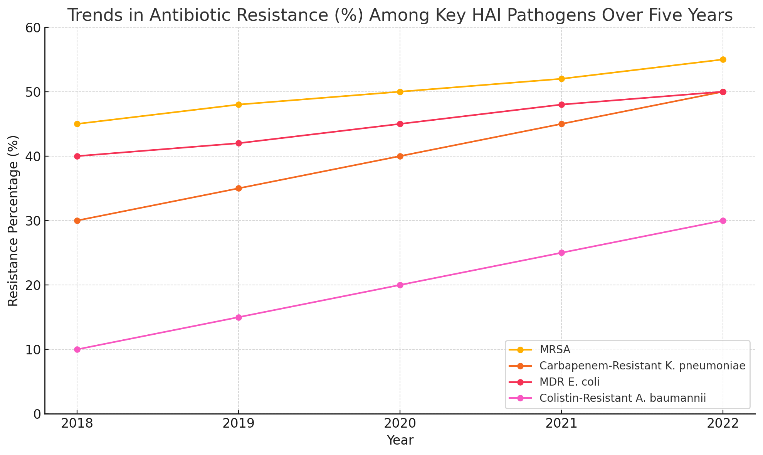
Hospital-acquired infections (HAIs) pose a significant global health challenge, exacerbated by rising antibiotic resistance. This five-year retrospective study evaluates the antibiotic resistance patterns of common bacterial pathogens isolated from HAIs in tertiary care hospitals across Pakistan. The study analyzes trends in multidrug resistance (MDR), extensively drug-resistant (XDR), and pan-drug resistant (PDR) organisms. Findings reveal alarming rates of resistance among key pathogens such as Staphylococcus aureus, Escherichia coli, Klebsiella pneumoniae, and Acinetobacter baumannii. Resistance to last-resort antibiotics, including carbapenems and colistin, is increasing, posing severe treatment challenges. The study underscores the urgent need for enhanced antimicrobial stewardship, infection control practices, and surveillance systems in Pakistani healthcare settings to mitigate the spread of resistant HAIs
Downloads
Article Details
Section

This work is licensed under a Creative Commons Attribution-NonCommercial-NoDerivatives 4.0 International License.
-
All published articles are open access, with copyright shared between the authors and the journal. The journal retains the exclusive right to first publication and identifies itself as original publisher.
-
Articles are made available under a Creative Commons CC BY‑NC‑ND 4.0 license, permitting users to copy and distribute the content for non‑commercial purposes only, without modification, provided proper credit is given to authors and JCPHS.
-
Redistribution or reuse must preserve the full citation details and include a link to the license. No derivatives, adaptations, or commercial uses are permitted without prior written permission.