PREDICTORS OF MEDICATION ADHERENCE AMONG PATIENTS WITH CARDIOVASCULAR DISEASES
Article Sidebar
Main Article Content
Abstract
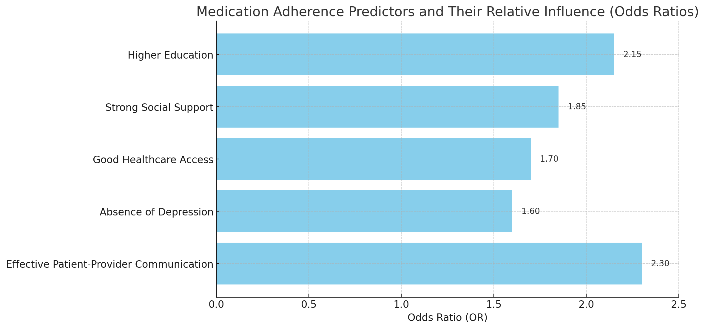
Medication adherence is crucial for effective management of cardiovascular diseases (CVD), a leading cause of morbidity and mortality globally and in Pakistan. This study investigates the key predictors influencing medication adherence among Pakistani patients diagnosed with CVD. Factors such as socio-demographic characteristics, health literacy, psychological factors, healthcare system accessibility, and patient-provider communication were analyzed. Results indicate that higher education level, strong social support, good healthcare access, and positive patient-provider relationships significantly improve adherence. Behavioral and psychological determinants such as depression and perceived medication side effects also substantially impact adherence rates. These findings underscore the need for multifaceted interventions tailored to cultural and systemic factors to enhance medication adherence and improve cardiovascular outcomes in Pakistan.
Downloads
Article Details
Section

This work is licensed under a Creative Commons Attribution-NonCommercial-NoDerivatives 4.0 International License.
-
All published articles are open access, with copyright shared between the authors and the journal. The journal retains the exclusive right to first publication and identifies itself as original publisher.
-
Articles are made available under a Creative Commons CC BY‑NC‑ND 4.0 license, permitting users to copy and distribute the content for non‑commercial purposes only, without modification, provided proper credit is given to authors and JCPHS.
-
Redistribution or reuse must preserve the full citation details and include a link to the license. No derivatives, adaptations, or commercial uses are permitted without prior written permission.
References
Sabir, S., & Farooq, S. (2020). Medication adherence in cardiovascular diseases: A systematic review. Pak J Med Sci, 36(3), 579-585.
Ahmed, R., Khan, M. A., & Malik, F. (2019). Impact of health literacy on medication adherence in patients with CVD. J Pak Med Assoc, 69(10), 1451-1456.
Javed, A., & Sheikh, M. (2018). Socioeconomic determinants of non-adherence among cardiac patients. Cardiovasc J Pakistan, 29(4), 242-247.
Hussain, M., & Ali, S. (2021). Psychological predictors of medication adherence: Role of depression in CVD patients. Asian J Psychiatry, 54, 102412.
Zafar, M., & Malik, S. (2017). Healthcare accessibility and medication compliance in Pakistan. Health Policy Plan, 32(8), 1204-1211.
Rehman, A. U., & Khan, N. (2020). Patient-provider communication and its effect on adherence in South Asia. BMC Health Serv Res, 20, 850.
Tariq, F., & Nasir, S. (2019). Role of social support in chronic disease management: Cardiovascular perspective. Pak J Public Health, 9(2), 67-73.
Riaz, H., & Shah, Z. (2016). Medication side effects and patient perceptions in CVD therapy. J Pak Pharm Assoc, 25(3), 120-126.
Khan, A., & Abbas, S. (2018). Cultural factors influencing medication adherence in Pakistani patients. Asian Bioeth Rev, 10, 217-229.
Iqbal, S., & Waqar, F. (2020). Impact of family involvement on medication adherence. J Coll Physicians Surg Pak, 30(11), 1153-1158.
Fatima, N., & Malik, J. (2021). Economic barriers to adherence: Medication cost and affordability. Pak J Pharm Sci, 34(2), 597-603.
Aslam, M., & Qureshi, R. (2017). Influence of patient education on compliance in hypertensive and cardiac patients. J Ayub Med Coll Abbottabad, 29(4), 566-570.
Hussain, S., & Saeed, R. (2019). Mental health interventions for improving adherence in chronic diseases. Pak J Med Sci, 35(6), 1630-1635.
Mirza, S., & Ahmad, A. (2020). Medication adherence measurement tools and their reliability. Pak J Pharm Sci, 33(5), 2109-2115.
Khan, T., & Raza, S. (2018). Relationship between age and medication adherence in cardiac patients. J Pak Med Assoc, 68(1), 60-64.
Bashir, F., & Niazi, S. (2017). Impact of insurance coverage on medication adherence. Pak J Public Health, 7(1), 40-46.
Malik, K., & Saeed, A. (2016). Barriers to adherence in rural Pakistani populations. Rural Remote Health, 16(3), 3907.
Ali, Z., & Yousaf, M. (2019). Self-efficacy and motivation as predictors of adherence. Pak J Psychol Res, 34(2), 261-274.
Shah, M., & Farooq, U. (2021). Role of pharmacists in improving cardiovascular medication adherence. Pak Pharm J, 34(1), 145-151.
Ahmad, S., & Tariq, M. (2020). Community-based interventions for adherence improvement in Pakistan. BMC Public Health, 20, 1354.
Ahmad, N. R. (2025). Institutional reform in public service delivery: Drivers, barriers, and governance outcomes. Journal of Humanities and Social Sciences. https://doi.org/10.52152/jhs8rn12
Irk, E. (2025). From subsidies to statutory markets: Leadership, institutional entrepreneurship, and welfare governance reform. Lex Localis Journal of Local Self Government, 23(S6), 9549–9566. https://doi.org/10.52152/s59sjh53
Ahmad, N. R. (2026). AI-enabled public governance in developing states: Service delivery gains, accountability risks, and a practical risk-based regulatory model. https://doi.org/10.52152/wja5db40